Aaron White
Research Fellow @ CERN
LHCb Experiment
FASER Experiment
| 2025-now |
Forward neutrino measurements with FASER
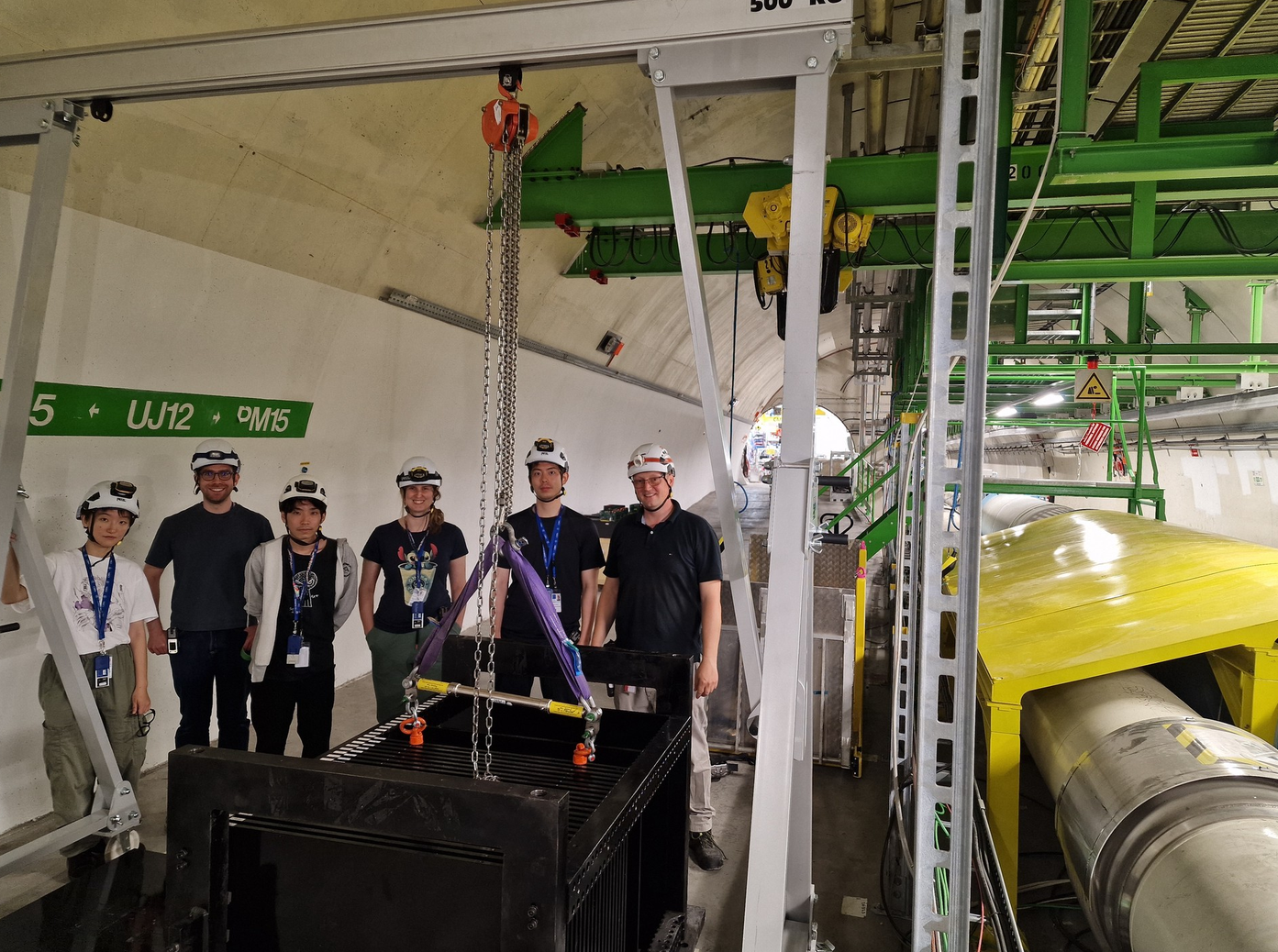
I am project leader for the AHCAL prototype detector (26 person team). It is a 5 ton sampling calorimeter that was installed in the LHC tunnel in 2026. I wrote significant parts of the data acquisition software and trigger firmware logic in order to make AHCAL compatible with FASER readout. In 2026 we recorded 33 fb-1 of data, which should be sufficient to observe ∼30 νe and ∼150 νμ neutrinos. I am coordinating the analysis of the dataset. I am also an author on the Run 4 technical proposal, submitted for LHCC review September 2026. Paper expected in early 2027 |
|
| 2025-now |
Search for Dimuonium with LHCb
I am leading the search for the bound state of two muons. This state has never been observed, and would provide a unique laboratory to study muon-muon interactions for the first time. I proposed and implemented new trigger lines in 2026 to capture the double Dalitz decay (η→ℓ+ℓ−μ+μ−). I am also involved in the dark photon search, as the phenomenology of dimuonium is very similar to that of dark photons. Paper expected in late 2027. |
|
| 2024-2025 |
Convenership of the CCS Sub-group
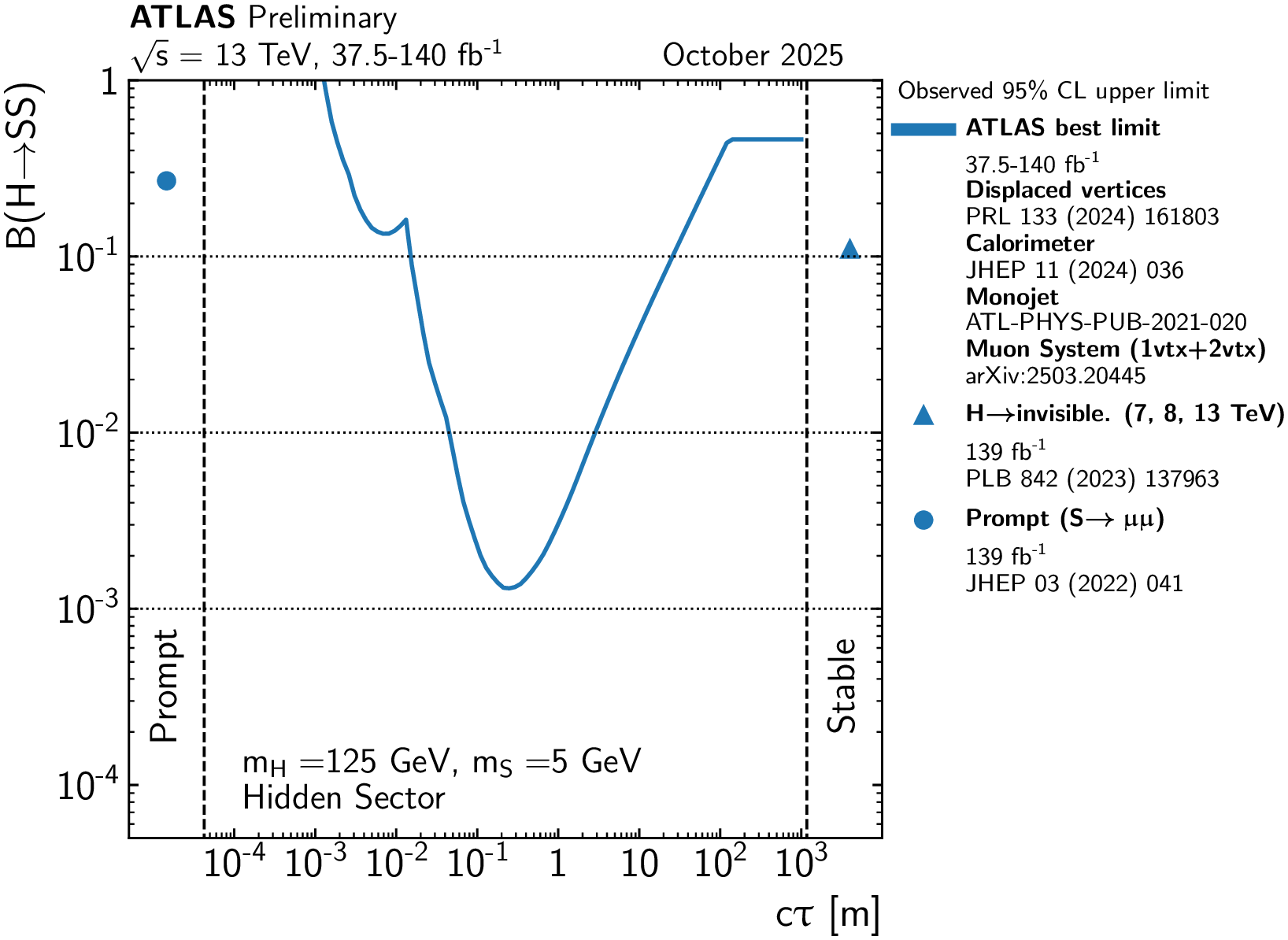
I served as convener of the newly-formed Combinations, Crosstalk, and Summaries (CCS) sub-group (∼ 20 person group) in the Exotics group. We published five public notes to highlight ATLAS contributions in diverse areas like dark matter, axion searches, and long-lived particles. [CDS, CDS, CDS, CDS, CDS] |
|
| 2020-2025 |
Commissioning, Maintenance, and Operation of the New Small Wheels
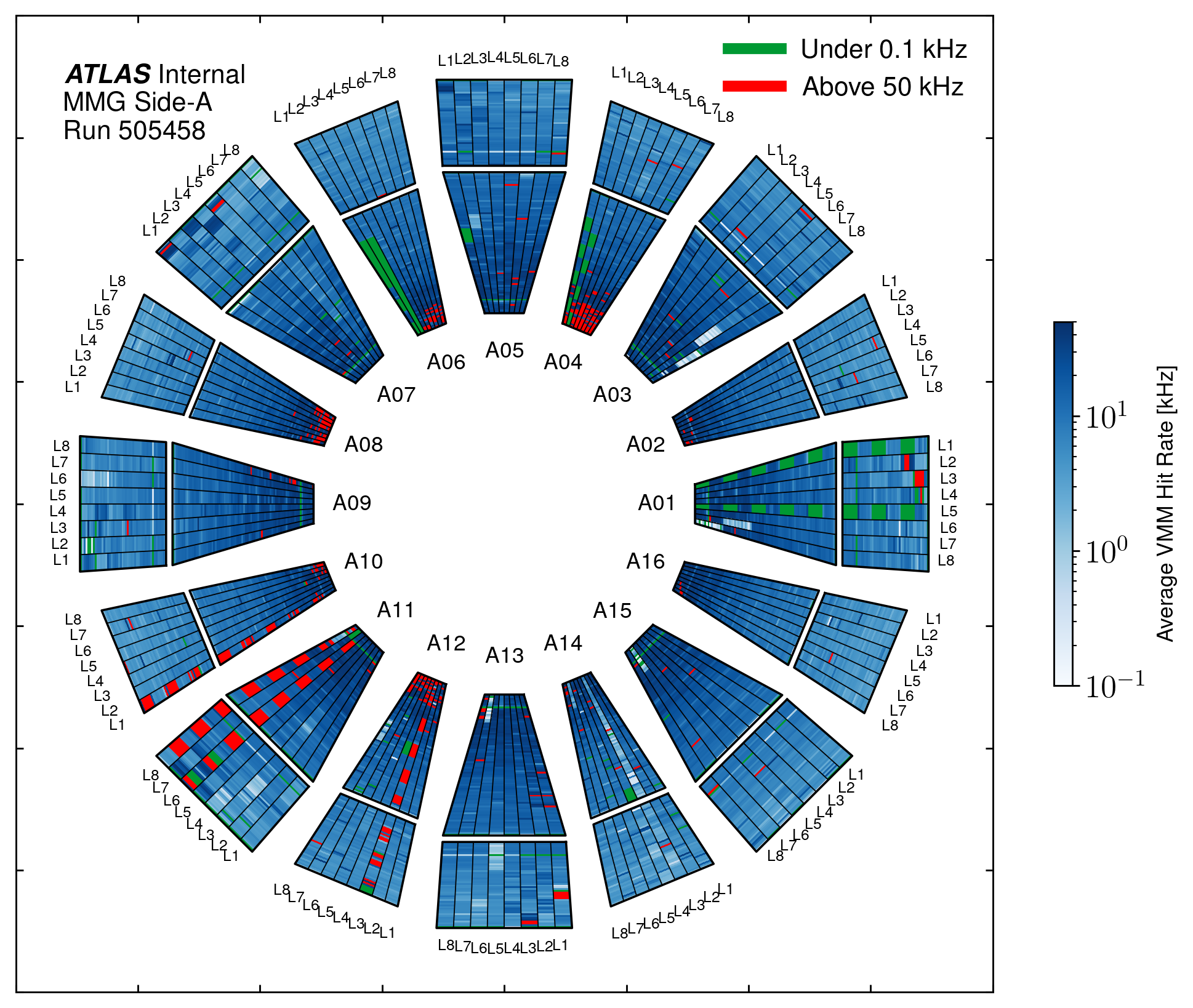
I worked as a postdoc to prepare the NSW for data taking. I supervised 13 undergrad and 3 PhD student projects. I was also responsible for two key ASICs in the front-end electronics: the VMM readout chip, and the GBTx transceiver. I wrote the communication library to configure the GBTx, and took on the responsibility for its calibration. I also wrote several calibrations for the VMM, including selecting thresholds, masking broken channels, and measuring effective thresholds. [JINST] |
|
| 2023-2024 |
New Small Wheel Link Stability Task Force
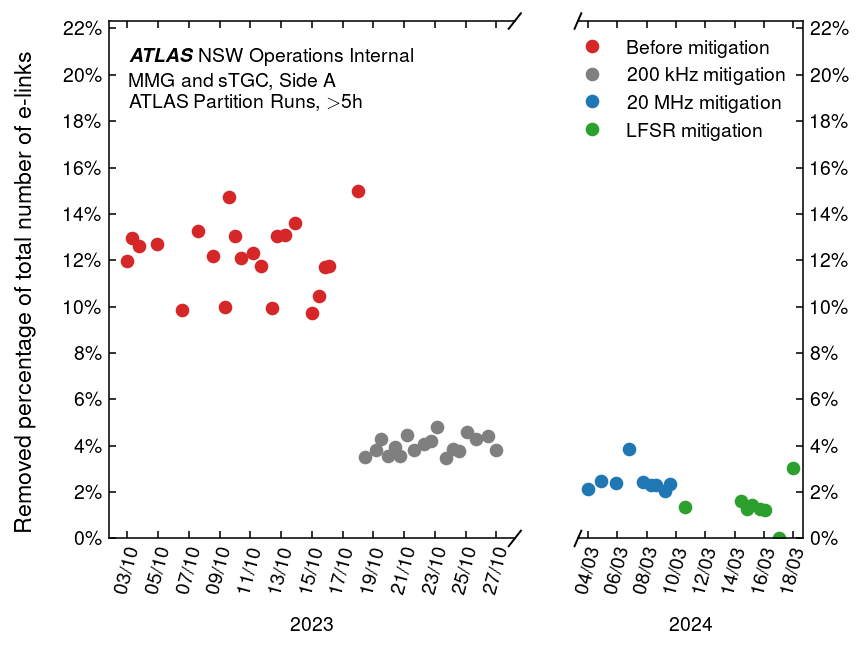
I led an emergency task force (8 person engineer/physicist team) in the muon group to investigate the problem of instability in the optical links from the NSW. The project was initiated when I noticed patterns in which optical links become unaligned during data taking. We found the cause and deployed a solution. The problem impacts all users of the CERN GBTx and lpGBTx ASICs. For this work, my team and I received the 2024 ATLAS Outstanding Achievement Award. |
|
| 2023-2024 |
Summary of Simplified Dark Matter Models with s-Channel Mediators
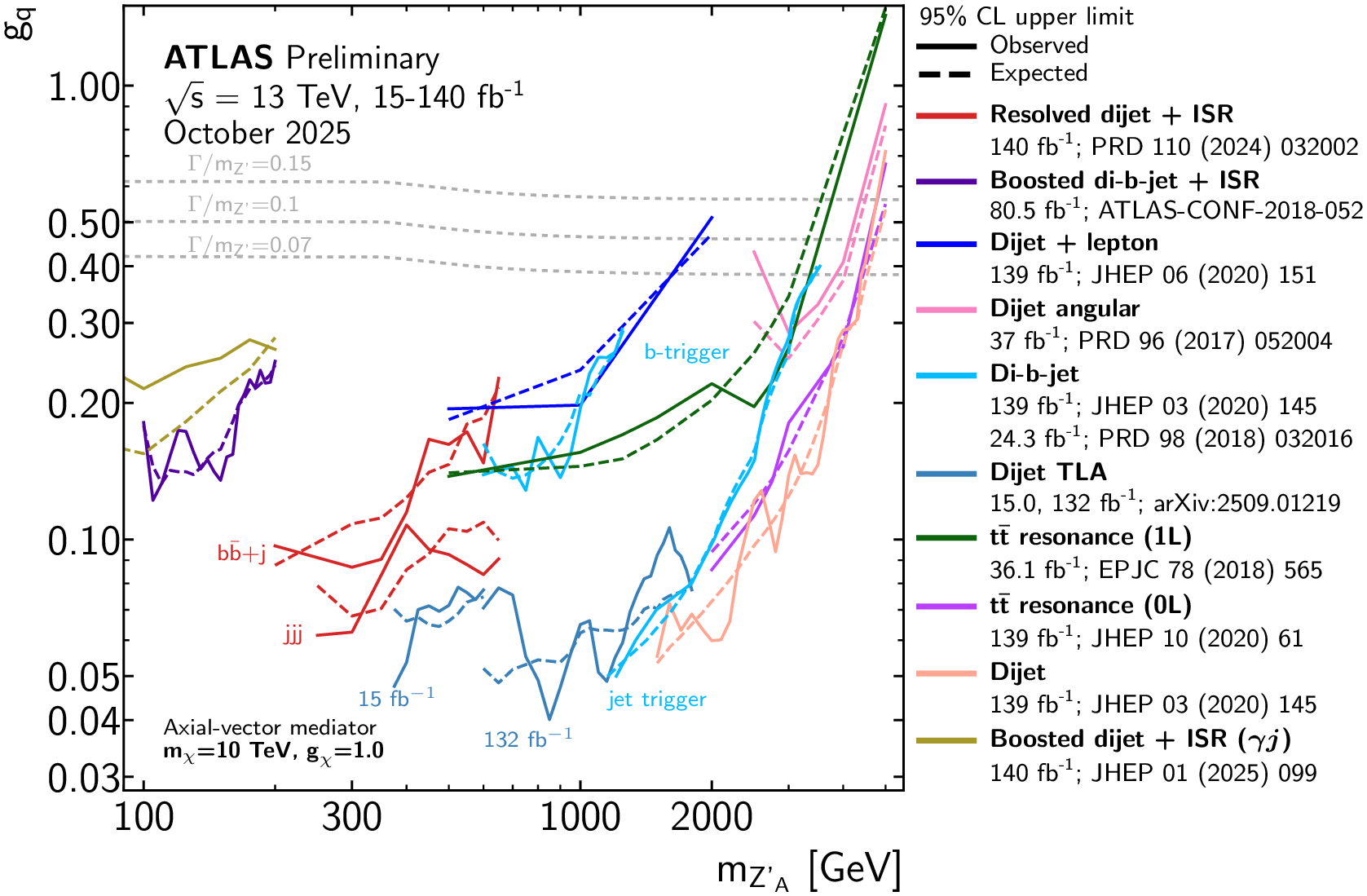
I led the summary of ATLAS constraints on simplified dark matter (DM) models with s-channel mediators as analysis contact (4 person group). I implemented a new procedure to reinterpret ATLAS limits in terms of the coupling of DM to Standard Model particles. I also proposed four new benchmarks for Run 2. [EPJC] |
|
| 2016-2020 |
Thesis: Search for H→μ+μ− at the ATLAS Experiment
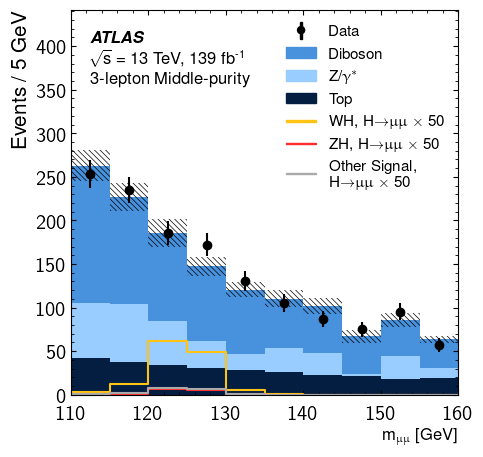
I received the 2016 Chateaubriand fellowship to develop the search for H→μ+μ−, leading to the identification of VH as a promising channel. I led the effort to consider the VH production mechanism in the search for H→μ+μ−. The VH selection suppresses the dominant Drell-Yan background. I used a multivariate analysis trained on the associated vector bosons to reduce the remaining diboson backgrounds. The measured significance is 2.0 σ. [PLB, CDS, thesis] |
|
| 2018-2020 |
Thesis: Search for Non-resonant Dilepton Phenomena at the ATLAS Experiment
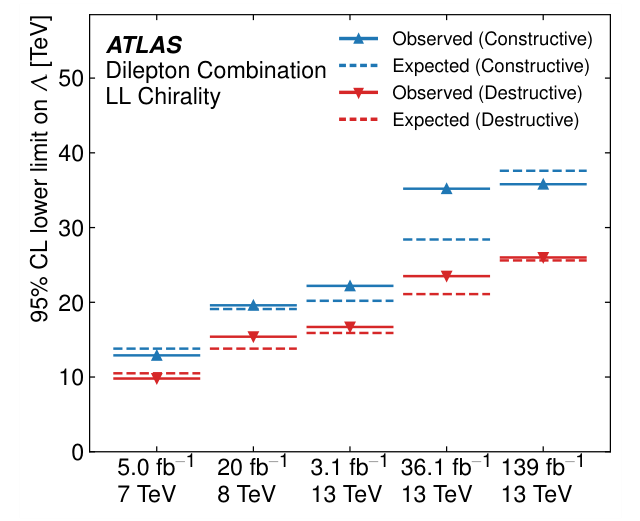
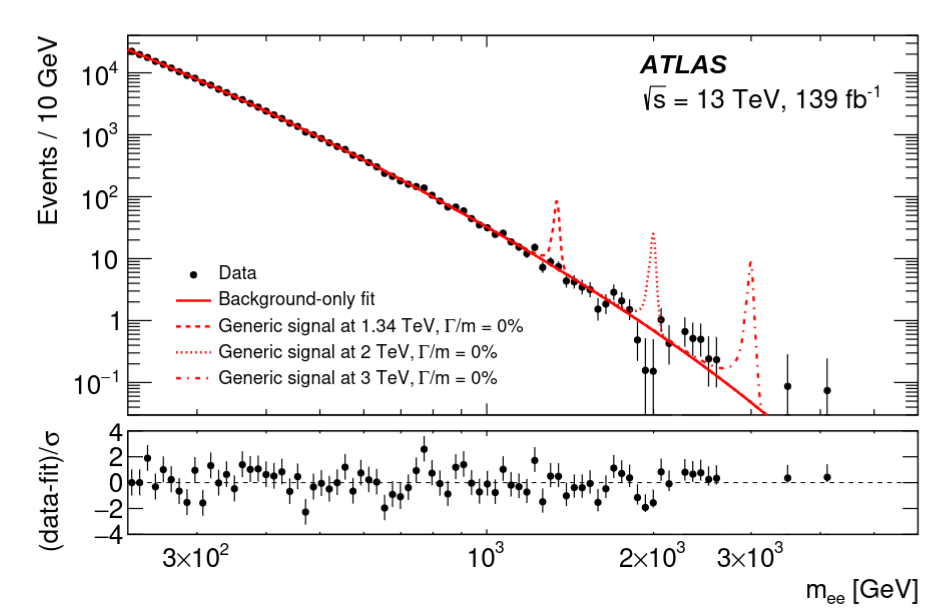
I led the search for non-resonant features in the dilepton ispectra as analysis contact (9 person team). I developed new techniques for background estimates and modeling systematic uncertainties in fits. The result was published in JHEP with limits on four-point contact interaction scales reaching 35.8 (37.6) TeV. For this and other work I received the 2020 US ATLAS Outstanding Graduate Student Award. [JHEP, CDS, thesis] |
|
| 2015-2017 |
Electronics for the Run 4 MDT Upgrade
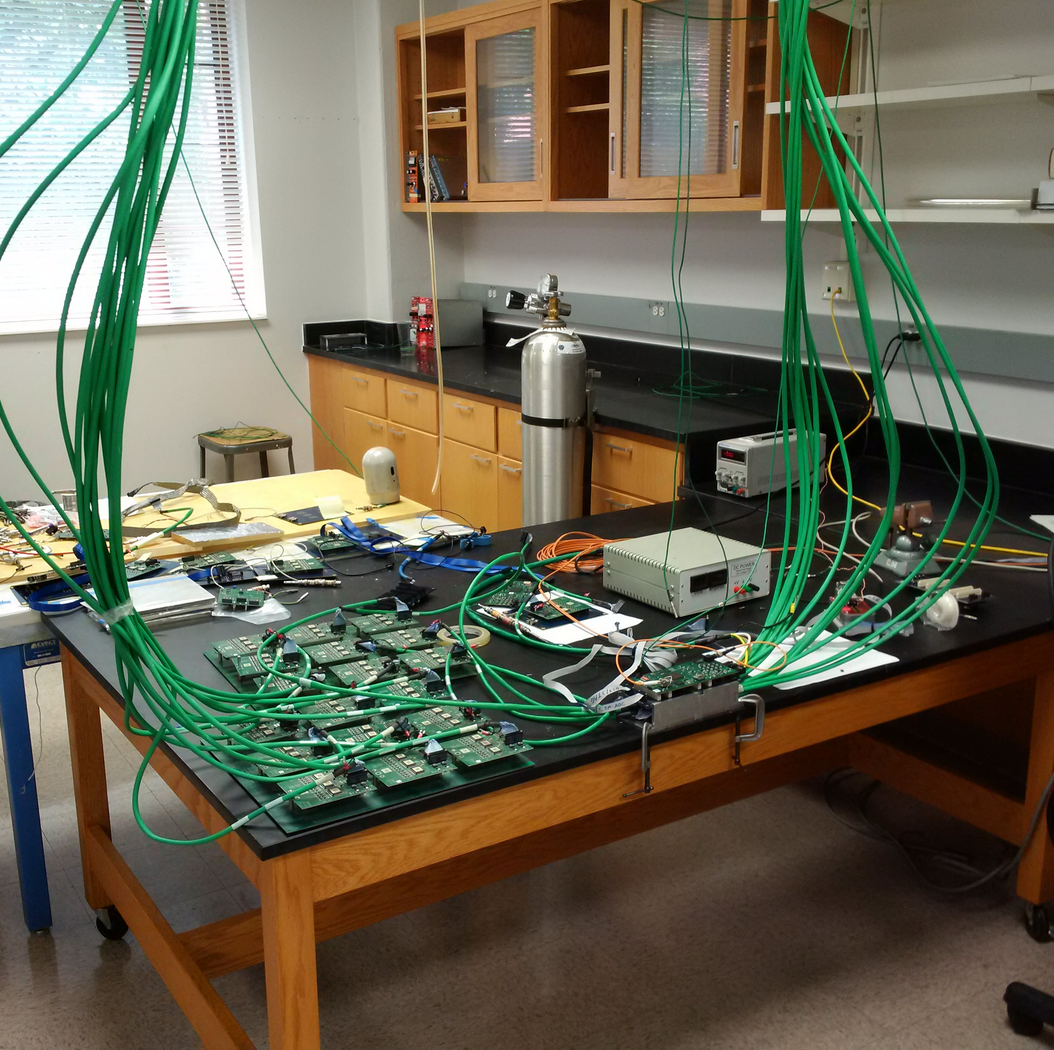
Authorship qualification for ATLAS. I simulated the impact of increased luminosity on the MDT electronics, showing that they were unsuitable for the HL-LHC event rate. I designed and tested a concept for a high-rate front-end upgrade for my authorship qualification task. The demonstration included an input emulator, a GBTx-type transceiver implemented in an FPGA, and DAQ software. The prototype was validated in a beam test. |
|
| 2017-2018 |
Search for Z′→ℓℓ at the ATLAS Experiment
I searched for new resonances Z′ in the dilepton spectra. I worked on background modeling studies using SWIFT and Functional Decomposition methods. Limits on the Z′ mass reached 5.1 TeV. [PLB, Proc] |
|
| 2014 Sep – 2015 May |
Detector R&D on the POLARIS Experiment
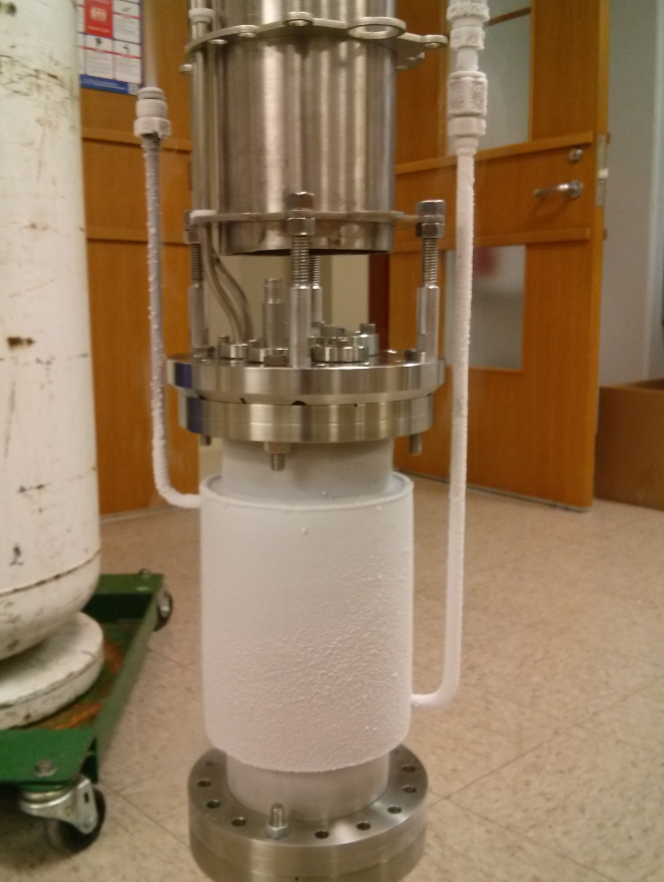
I developed and built a new hybrid scintillator/TPC detector sensitive to low energy (200 KeV-10 MeV) neutrons. The detector uses deuterated methane in liquid argon to increase the neutron cross section, and has applications for measuring the low energy neutron background at large detectors like PHENIX at RHIC. Advisor Christine Aidala, working with Micheal Febbraro. |
|
| 2014 May – 2014 Aug |
R&D on Firmware Development for the MDT Readout
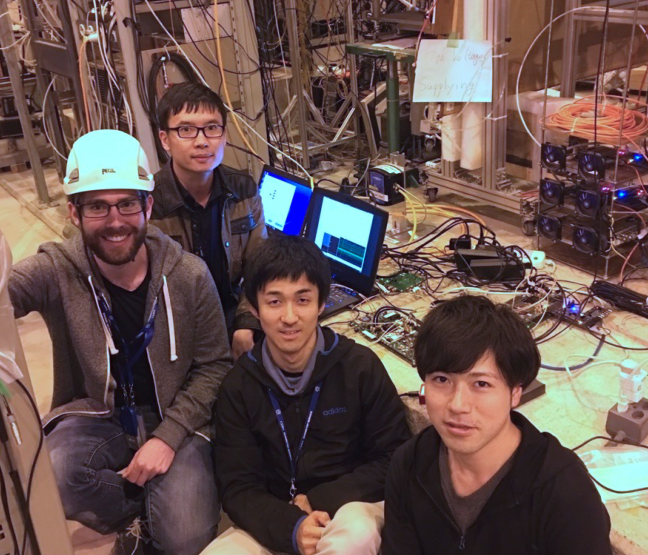
I developed an interface to read the configuration and correct single event upsets of an FPGA located on the ATLAS muon front-end Chamber Service Module (CSM) board. This work addressed a performance issue for the CSM during LHC Run 1. Advisor Bing Zhou, working with Tiesheng Dai. |
|
| 2013 May – 2014 May |
γγ Analysis at PHENIX Experiment
I studied the efficacy of transverse momentum cuts at the PHENIX Experiment for direct photon identification in the 2012 510 GeV polarized proton-proton collisions at RHIC. Direct photons are a useful probe into parton kinematics as they escape the underlying event without interaction, so it is important to be able to distinguish them from non-prompt backgrounds. Advisor Christine Aidala. |
|
| 2012 Sep – 2013 Feb |
Astrophysics Study
I compiled a spatially complete sample of OB field stars in the Small Magellanic Cloud (SMC), and compared them to galactic and cluster populations. The findings have implications for the formation of the SMC. Advisor Sally Oey. [Astrophysicsl J.] |
|
| 2011 Dec – 2012 Aug |
Cosmological Modeling
I modeled the baryonic acoustic oscillations in the cosmic microwave background to study the formation of large scale structure from primordial isotropy. Advisor Dragan Huterer. |
|
| 2007 Jan – 2011 Aug |
Cellular biology
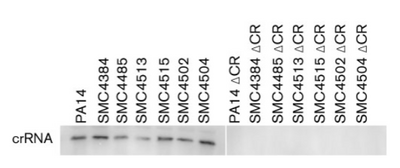
The CRISPR region of DNA in prokaryotes contains a library of short DNA pieces copied from bacteriophage. I characterized how the CRISPR has added entries to its library over generations of Pseudomonas aeruginosa. Advisor George O'Toole, working with Kyle Cady. [Microbiology] |
|


